
By Sean Morris, LearnFit.org
When the school bell rings, many parents of children with disabilities are left asking a familiar question: “What now?” The hours between school and dinner are ripe with possibility—yet too often, they’re filled with compromises or routines that don’t stretch a child’s imagination. It’s not about keeping kids busy. It’s about lighting them up. What if the after-school hours became the most expansive, freeing, and joyful part of their day? Let’s look at creative, sensory-rich, and deeply inclusive activities that open new doors—and new ways of seeing the world—for your child.
Nature Is Not Off Limits
The outdoors has long been framed as an escape, but for many kids with disabilities, it’s treated as a logistical burden. That’s a failure of design—not of the children. New models of inclusive nature play spaces are flipping this script, showing how therapeutic gardens and adaptive nature play areas can foster curiosity, reduce stress, and support sensory regulation. These aren’t just modified parks. They’re spaces built with every child in mind, where paths welcome wheels, plants invite touch, and unstructured play is treated as a right—not a privilege.
Let Them Move: The Joy of Adaptive Dance
For children with disabilities, movement can be more than exercise—it can be liberation, rhythm, and a language of its own. That’s exactly what the dance for those with disabilities programs at Dancing Wheels deliver. With a philosophy rooted in integration, this dance company brings wheelchair and stand-up dancers together in dynamic, expressive harmony. Their classes aren’t designed to check a box—they’re built to cultivate artistry, teamwork, and confidence. Whether your child moves with wheels or steps, these programs prove that dance is for every body. And more than that: it’s a way to feel seen.
Build Worlds with Words: Text-to-Art Creation
If your child has a wild imagination but struggles to get it “onto the page,” don’t overlook the potential of visual AI tools. Platforms like Firefly make it possible to create AI art with text, helping children turn ideas into vibrant visuals just by typing a phrase. They don’t need refined motor skills or drawing confidence—just a spark of curiosity and access to a keyboard. A jellyfish circus in outer space? A dragon with hearing aids? The only limit is the child’s mind. And seeing their ideas come to life instantly can be powerfully validating.
The Studio as Safe Haven: Sensory & Craft Spaces
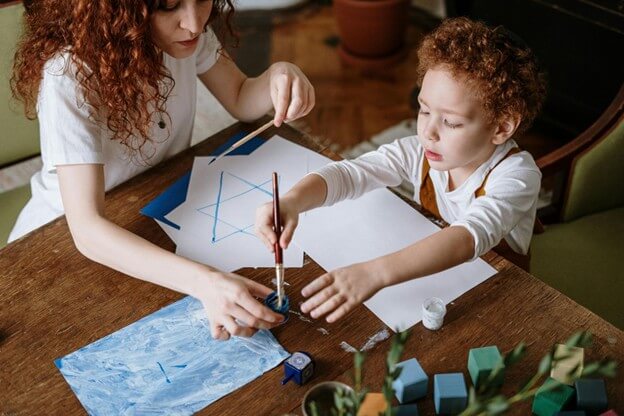
Not every child wants the noise or unpredictability of big group settings—and that’s valid. For those who crave tactile input or quiet focus, creative workshops and sensory-friendly studios can offer a kind of sanctuary. Spaces that center hands-on sensory creative activities—like soft sculpture, sand art, or scent-based painting—create low-pressure ways to explore, invent, and self-regulate. These activities speak especially well to kids with autism or sensory processing differences. There’s no right way to “succeed.” The materials meet the child where they are. And in that kind of freedom, so much learning blooms.
Arts With Intention, Not Just Access
Too often, kids with disabilities are invited into arts spaces only after those spaces are designed, operating, and full of friction. That’s why programs built from the ground up around inclusive arts-integrated instruction are so transformative. These models don’t just make room—they’re built on the premise that creativity is a universal learning pathway. With trained teaching artists who collaborate directly with educators and therapists, these programs interweave visual art, music, and movement with core learning and social development goals. It’s not “art as therapy” or “art as extra.” It’s art as access.
Assistive Tech as a Door, Not a Wall
When people hear “technology,” they often imagine screens replacing connection. But assistive technology tools can do the opposite: they open access to play, art, reading, and conversation. From speech-to-text apps and noise-canceling headphones to adaptive joysticks and visual scheduling tools, these devices support independence and reduce daily friction. After school, this might look like a child using a voice generator to participate in a drama game or a screen reader to follow a comic-making app. The goal isn’t to make things “normal”—it’s to make them work. For your child, that might be everything.
The Power of Peer Play, Without the Pressure
Social interaction is often one of the trickiest after-school zones for children with disabilities—particularly when peers are moving fast or expectations feel unspoken. That’s why a structured peer group environment can be so powerful. Designed with clear roles, flexible rules, and supportive facilitation, group sessions can build emotional vocabulary, conflict resolution skills, and genuine friendships. What sets these apart from traditional clubs or classes is the deliberate design: conversations are scaffolded, transitions are supported, and no one’s left behind or asked to “just figure it out.” Relationships happen here—but at a pace that honors the child.
After-school hours can be more than filler. They can be the space where your child experiments, expresses, and expands. When options are built from empathy—not just compliance—children with disabilities don’t just participate. They lead. The best programs don’t try to normalize differences. They cultivate uniqueness. Whether through inclusive dance, tactile art, adaptive tech, or peer bonding, your child deserves an after-school rhythm that’s as rich, varied, and creative as they are. Not because it’s nice. But because it’s overdue.
Experience the transformative power of dance with Dancing Wheels, where creativity knows no bounds and every movement is a testament to the spirit of inclusivity and innovation.